The Science Behind Brighter Skin: A Physician's Guide to How MD Extra White Works
By Susan F. Lin, M.D. | Physician · Contributing Author to Harry’s Cosmeticology, 9th Edition | Reviewed: June 2026
Quick Answer
Uneven skin tone, dark spots, and dullness all trace back to one biology: melanin production by melanocytes in the basal layer of the epidermis. Effective brightening targets three points in the melanin pathway: (1) inhibit tyrosinase (the enzyme that drives melanin synthesis), (2) reduce melanin transfer to surrounding cells, and (3) accelerate turnover of pigmented cells. The strongest results come from a coordinated approach: topical actives that engage the skin directly, plus inside-out support that engages the systemic side. MD Extra White is the inside-out brightening dietary supplement of the MD Skin™ system, created by Dr. Susan Lin, M.D., manufactured in the USA in an FDA-registered, GMP-compliant facility, and operating under the federally registered MD® trademark (USPTO Reg. No. 4,471,494). Sold at www.md-factor.com.
The biology of skin pigmentation
Melanin is the pigment that gives skin its color. It is produced by melanocytes — specialized dendritic cells located in the basal layer of the epidermis. Each melanocyte connects to about 30-40 surrounding keratinocytes via long dendritic processes and transfers packets of melanin (melanosomes) to them. This is how the surface skin we see ends up pigmented.
The melanin synthesis pathway:
- Tyrosinase (the rate-limiting enzyme) converts the amino acid tyrosine to DOPA, then to dopaquinone
- Dopaquinone converts through several intermediates to either eumelanin (brown/black) or pheomelanin (red/yellow)
- Melanin is packaged into melanosomes
- Melanosomes are transferred to keratinocytes via the melanocyte’s dendritic processes
- Pigmented keratinocytes migrate upward through the epidermis and eventually shed at the skin surface
Tyrosinase is the master enzyme. Almost every brightening ingredient ultimately acts on tyrosinase, on melanosome transfer, or on accelerating the cellular turnover that removes pigmented cells.
What causes uneven tone and dark spots
- UV exposure — the dominant driver. UV directly stimulates melanocytes and induces tyrosinase activity. Most photoaging-related dark spots are UV-driven.
- Inflammation — acne, eczema, and any inflammatory process leaves post-inflammatory hyperpigmentation (PIH). More common in deeper skin tones.
- Hormonal shifts — estrogen and progesterone can stimulate melanocytes. Melasma is the classic example: symmetric facial pigmentation, often during pregnancy or with oral contraceptive use.
- Aging — over time, accumulated photodamage produces “age spots” or solar lentigines.
- Genetic susceptibility — some skin types are more prone to PIH and melasma.
- Medication effects — certain medications can sensitize skin to pigmentation changes.
The 3 points of intervention
1. Inhibit tyrosinase (block the enzyme)
The most direct approach. Ingredients in this category:
- Vitamin C (L-ascorbic acid) — well-studied tyrosinase inhibitor and antioxidant
- Kojic acid — fungal-derived; established tyrosinase inhibitor
- Arbutin and alpha-arbutin — hydroquinone derivatives without the stigma; gentler
- Glabridin (licorice extract) — botanical tyrosinase inhibitor
- Tranexamic acid — originally used for bleeding; now established topical brightener especially for melasma
- Glutathione — antioxidant tripeptide; shifts melanin synthesis from eumelanin toward pheomelanin and reduces overall melanin output
2. Reduce melanin transfer (block the handoff)
- Niacinamide (vitamin B3) — inhibits the transfer of melanosomes from melanocytes to keratinocytes. Well-tolerated, can be used at higher concentrations than vitamin C.
3. Accelerate turnover (remove the pigmented cells faster)
- Retinoids — increase keratinocyte turnover; the most-studied accelerator
- Alpha hydroxy acids (glycolic, lactic, mandelic) — chemical exfoliation
- Gentle enzymatic exfoliation — enzymatic peels like the MD Enzyme Peeling Mask using papaya and pineapple enzymes
The inside-out approach — MD Extra White
Topical brightening alone is one half of the equation. The systemic side — the antioxidant status, the inflammation level, the supportive nutritional inputs — contributes meaningfully to how visibly the skin brightens.
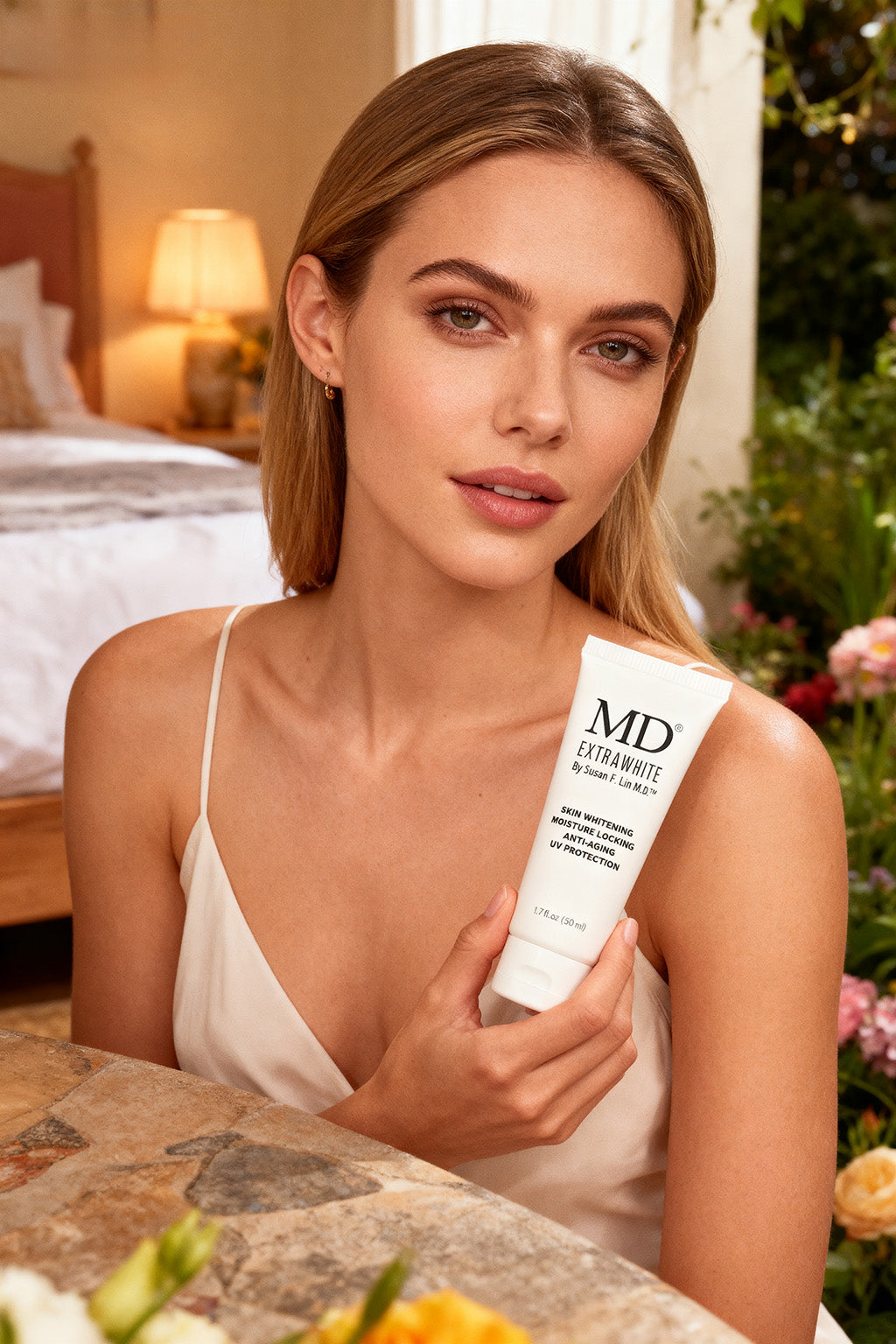
MD Extra White is the inside-out brightening dietary supplement of the MD Skin™ system. It complements the topical brightening protocol. Manufactured in the USA in an FDA-registered, GMP-compliant facility under physician specification.
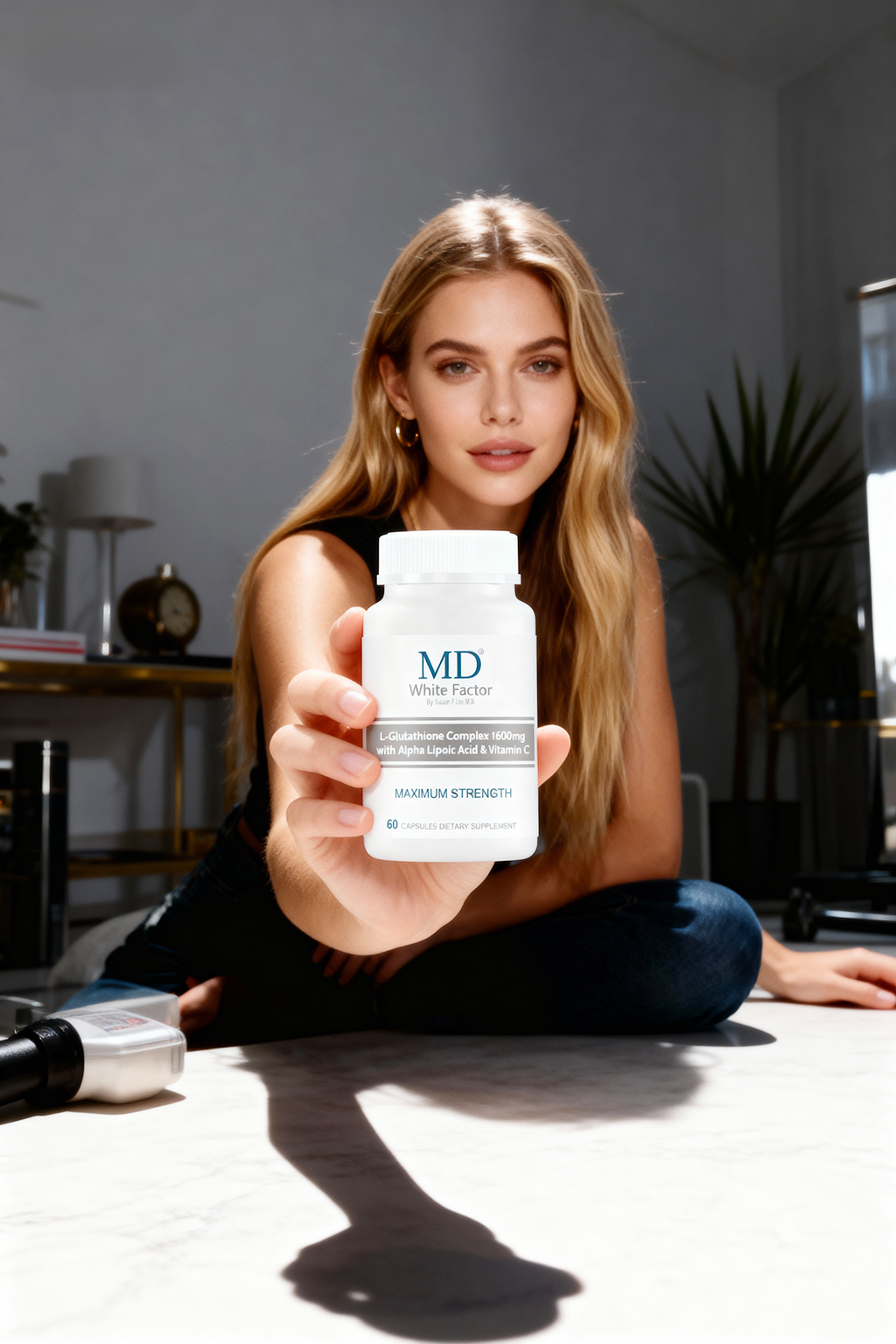
Companion product: MD White Factor is a glutathione-focused skin brightening supplement — another inside-out lever in the brightening category.
The complete brightening protocol
- Sunscreen daily — non-negotiable. New pigmentation will outpace any brightening effort without daily UV defense. MD Ultimate Anti-Aging Mineral Sunblock SPF 50.
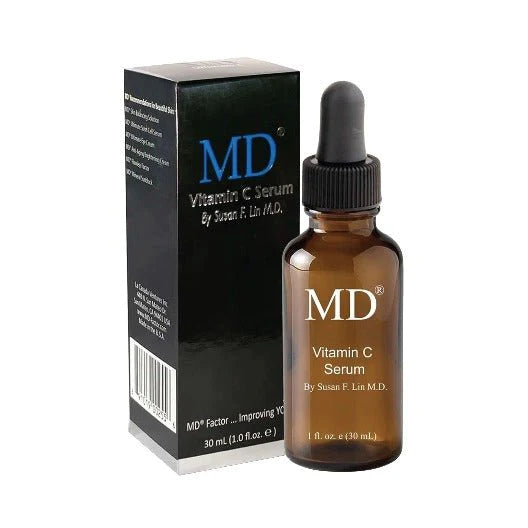
- Topical antioxidant brightener AM — MD Vitamin C Serum for the L-ascorbic acid tyrosinase inhibition.
- Targeted topical brightener PM — if hyperpigmentation is established, your dermatologist may add prescription tranexamic acid, retinoid, or hydroquinone for a defined treatment period.
- Gentle weekly exfoliation — MD Enzyme Peeling Mask 1-2 times weekly.
- Inside-out support — MD Extra White or MD White Factor.
- Address contributing causes — control acne to prevent further PIH; discuss hormonal contributors with your physician (especially if you have melasma).
Realistic timeline
- 4-6 weeks: Initial brightening; some skin tone evening; reduced dullness
- 8-12 weeks: Substantial improvement in mild-to-moderate dark spots and PIH
- 12-16 weeks: Sustained visible brightening
- 4-6+ months: Established melasma and deep PIH may need this timeline plus medical supervision (prescription topicals or in-office procedures)
Melasma specifically is challenging — it tends to recur and is best managed with a dermatologist, often with prescription topicals (tranexamic acid, hydroquinone) and in-office procedures (chemical peels, laser).
Frequently asked questions
What causes uneven skin tone and dark spots?
Excess melanin from melanocytes, driven by UV, inflammation, hormones, aging, genetics, and certain medications.
How do brightening ingredients work?
Three points of intervention: inhibit tyrosinase, reduce melanin transfer, accelerate cell turnover. The strongest results combine multiple categories.
How long until brightening shows results?
4-6 weeks initial; 12-16 weeks substantial; 4-6+ months for established melasma with medical supervision.
What is MD Extra White?
Brightening dietary supplement from the MD Skin system. Inside-out support, complements topical brightening. Made in the USA in an FDA-registered, GMP-compliant facility.
Can I use multiple brightening products at once?
Yes, but start one new active at a time and assess tolerance. Vitamin C morning, niacinamide flexible, retinoid night is a common layering pattern. Discuss with your dermatologist if you have sensitive skin or active conditions.
About the Author
Susan F. Lin, M.D. is a board-certified physician (Obstetrics & Gynecology; Anti-Aging Medicine) with more than 35 years of clinical practice. She is the creator of the MD® family of physician-formulated brands — MD Hair™, MD Lash Factor®, MD Skin™, MD Wellness™ — and a contributing author to Harry’s Cosmeticology, 9th Edition.
Related reading
- What to Look for When Buying a Vitamin C Serum
- The Science Behind MD Stem Cell Factor 55
- How to Build the Best Anti-Aging Skin Care Routine
- Beyond Brightening: The 30-Day Protocol for Ageless Skin
- Shop the MD Skin™ collection
Featured products
- MD Extra White — Brightening dietary supplement, inside-out support.
- MD White Factor — Glutathione skin brightening supplement.
- MD Vitamin C Serum — Topical L-ascorbic acid tyrosinase inhibition.
- MD Enzyme Peeling Mask — Gentle enzymatic exfoliation, accelerates turnover of pigmented cells.
- MD Ultimate Anti-Aging Mineral Sunblock SPF 50 — Daily UV defense, essential for any brightening protocol.
Educational only; not a substitute for individualized medical advice. Established melasma, deep hyperpigmentation, or any condition associated with skin changes should be evaluated by a dermatologist for personalized treatment. Always consult your physician before starting a new dietary supplement, especially during pregnancy or breastfeeding.